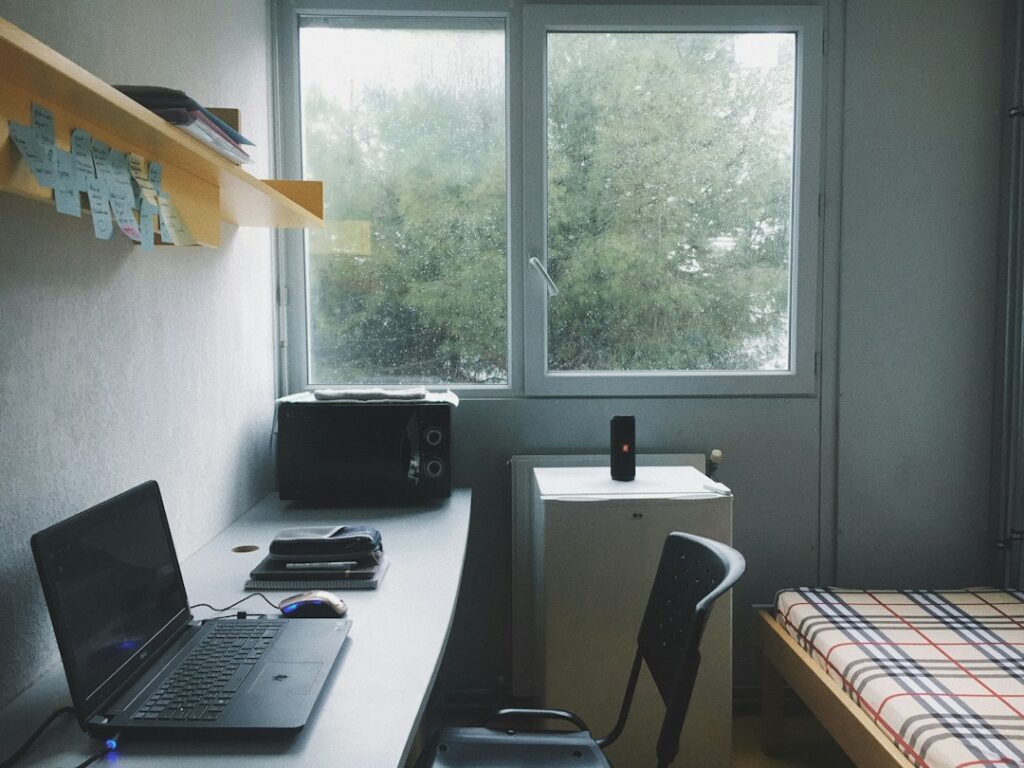
College students do not always need a separate renter’s insurance policy, but many do. The answer depends mainly on where the student lives, whether a parent’s policy extends coverage, how much property the student owns, and whether the lease requires insurance.
For families in Etowah, TN, reviewing coverage before move-in can prevent confusion after theft, fire, storm damage, or an accidental injury in a rental home.
Does a college student living in a dorm need renter’s insurance?
A student living in a college dorm may already have limited protection under a parent’s homeowners or renter’s policy. However, that coverage is not automatic in every situation and may have limits or exclusions.
A parent’s policy may extend to a full-time student who remains part of the household and lives in campus housing. Some policies limit coverage for belongings kept away from the primary home, often paying only a percentage of the household personal-property limit.
For example, if a student brings a laptop, phone, clothing, textbooks, furniture, bicycle, and other belongings to school, the available off-premises limit may not be enough to replace everything after a major loss.
Families should verify:
- Whether dorm-room belongings are covered
- How much coverage applies away from the primary residence
- Whether theft is included
- Whether the policy uses actual cash value or replacement cost
- Whether a deductible applies
- Whether expensive electronics, jewelry, instruments, or sports equipment have special limits
A separate student policy may be worth considering if the parent’s coverage is too limited or if the student owns several high-value items.
What changes if the student rents an apartment or house?
Students living off campus are more likely to need their own renter’s insurance. A parent’s policy may not extend to an apartment or rental house leased in the student’s name, even if the student is still financially dependent.
Off-campus renters often bring thousands of dollars in personal property. A basic inventory might include:
- Laptop and tablet
- Smartphone and accessories
- Clothing and shoes
- Furniture and kitchen items
- Textbooks and school supplies
- Bicycle or recreational equipment
- Television, gaming equipment, or musical instruments
The landlord’s insurance generally covers the building, not the renter’s belongings. If a covered fire damages the apartment, the landlord’s policy may help repair the structure while leaving the tenant responsible for replacing personal property.
A lease may also require renters insurance and may specify a minimum amount of liability coverage. That requirement should be reviewed before signing, particularly when several students share a rental.
What does renter’s insurance usually cover?
Renter’s insurance commonly combines personal-property coverage, personal liability coverage, and additional living expenses.
Personal property coverage may help repair or replace belongings damaged by covered events such as fire, certain types of storm damage, theft, or vandalism. Coverage depends on the policy language, exclusions, limits, and deductible.
Personal liability coverage may help if the renter is legally responsible for accidentally injuring another person or damaging someone else’s property. For example, it could apply to certain incidents involving a visitor or accidental damage that spreads from the rental unit to another part of the building.
Additional living expenses coverage may help pay increased costs if a covered loss makes the rental temporarily unlivable. Depending on the policy, this could include some additional lodging or food expenses above the renter’s normal costs.
Renter’s insurance does not usually cover the building itself, intentional damage, ordinary wear and tear, or every type of water loss. Flood damage is commonly excluded from standard renters policies. In a region that can experience heavy rain and severe thunderstorms, students should understand the difference between water entering from outside and water caused by an indoor plumbing problem.
Does renter’s insurance cover a roommate’s belongings?

Usually, one student’s policy does not automatically cover every roommate’s property. Each adult tenant may need separate coverage unless the policy specifically allows shared coverage.
Roommates should not assume that being listed on the same lease means they are insured under the same policy. They should also discuss how shared furniture, appliances, or electronics would be handled if one person purchased them and another person used them.
A written roommate agreement can help document ownership of expensive shared items, but it does not replace insurance coverage.
How much coverage should a student carry?
The amount should reflect the cost to replace the student’s belongings, not merely the amount of cash available in a checking account.
A useful starting point is to walk through the rental room by room and estimate the replacement cost of clothing, electronics, furniture, school materials, kitchen items, and recreational equipment. Photos, receipts, model numbers, and serial numbers can make a claim easier to document.
Students should also compare:
- Actual cash value, which subtracts depreciation from the value of an item
- Replacement cost coverage, which is designed to pay the cost of replacing an item with a similar new item, subject to policy terms and limits
Replacement cost coverage may provide more useful protection for newer electronics and furniture, while actual cash value coverage may result in a lower payment for older belongings.
The deductible matters as well. A policy with a higher deductible may cost less but requires the student to pay more out of pocket before insurance contributes.
What situations are often overlooked?
Students and parents frequently overlook several details:
A vehicle is not covered by renter’s insurance. A car, truck, motorcycle, or other vehicle needs separate auto insurance. Renter’s insurance may cover personal items stolen from a vehicle, but the vehicle itself is not covered under the renters policy.
Business property may have limits. A student who sells products online, tutors from home, or operates another small business may need to ask about business-property and liability exclusions.
High-value items may need special coverage. Jewelry, cameras, musical instruments, collectibles, and specialized sporting equipment can have policy sublimits.
A parent’s policy may change after graduation. Coverage that applies while a student lives in a dorm may not continue after the student moves into an off-campus apartment, graduates, marries, or establishes a separate household.
The policy may cover property away from the rental. Some policies extend limited protection to belongings kept in a vehicle, storage area, hotel room, or another temporary location, but coverage limits and exclusions vary.
What should families check before move-in?
Before a student moves into a dorm, apartment, or rental house, the family should review the existing policy and ask specific questions about the student’s living arrangement. The address, leaseholder, age, enrollment status, and type of housing can affect whether coverage applies.
Students should keep a copy of the lease, create a home inventory, photograph valuable belongings, and store records somewhere other than the rental unit. They should also understand fire-safety rules, lock doors and windows, and report maintenance concerns such as leaks or damaged electrical equipment promptly.
For many students in off-campus housing, renter’s insurance is a practical safeguard because replacing personal belongings and responding to an accidental liability claim can be financially difficult. For students in campus housing, a separate policy may not be necessary if a parent’s policy provides adequate coverage—but that should be confirmed rather than assumed.